Thalassemia

Thalassemia is an inherited blood disorder characterized by reduced production of hemoglobin.

There are two main types of thalassaemia:

  • α-thalassemia (or alpha thalassemia) occurs when a gene or genes related to the α-globin protein are missing or changed (mutated), and
  • β-thalassemia (or beta thalassemia) occurs when similar gene defects affect production of the β-globin protein.

There are many forms of thalassemia:

Each one of the above mentioned types has many different subtypes. Therefore, both α- and β- thalassemia include the following three forms:

  • Thalassemia major
  • Thalassemia intermedia
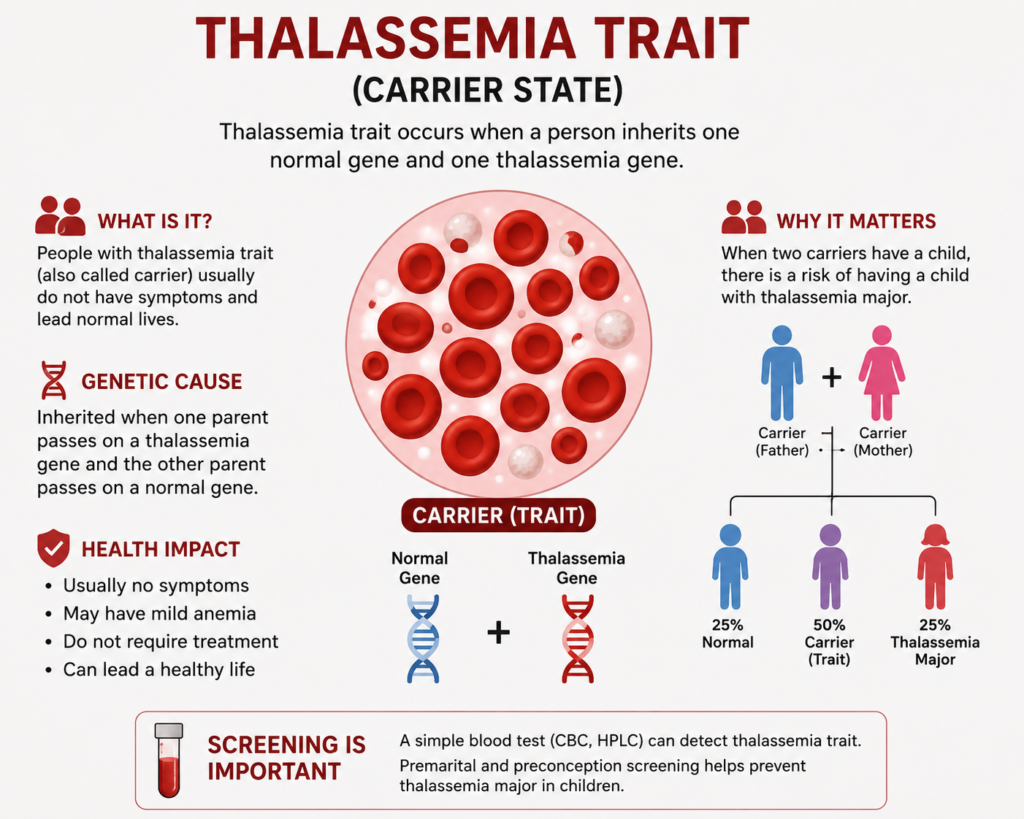
  • Thalassemia minor (or thalassemia trait)

HAVE YOU HEARD ABOUT THALASSAEMIA? Read the ATF brochure HERE.

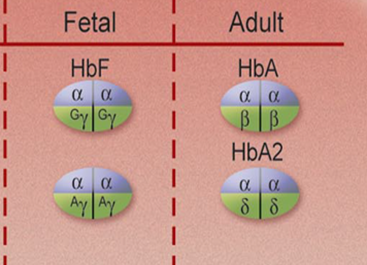
In the physiological situation, the globin chains are a balanced combination of the α-globin chains to the non-α-globin chains, which are mainly β-chains, which, coupled with α-chains form adult haemoglobin (HbA), or with δ-chains, forming a minor fraction of adult haemoglobin (HbA2) or γ-chains, forming the fetal haemoglobin (HbF).

Any reduced production of one of the globin chains while the other chains are normally produced, means that there will be an accumulation of the other (unpaired) globin chains, within the developing red cell. In this way if α-globin chains are not produced in adequate amounts there will be an accumulation of β-globin chains (α-thalassemia); if β-globin chains are inadequately produced then α-globin chains will accumulate (β-thalassemia).
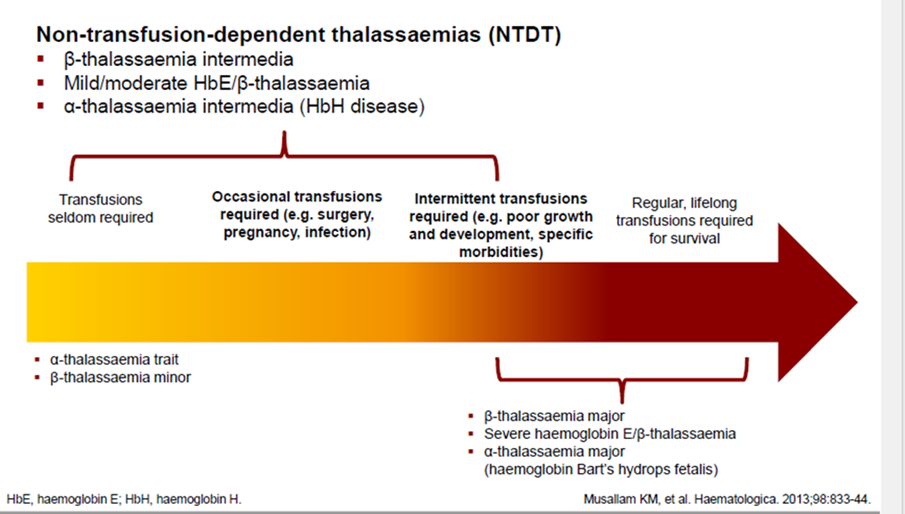
In the most severe forms of beta thalassemia the anaemia is so severe that unless it is corrected regularly by blood transfusion the patient will die early in life (mostly in infancy). The condition is then known as transfusion dependent thalassemia or TDT. Other cases may be able to survive with occasional or no blood transfusions, known as non-transfusion thalassemia or NTDT (see figure).

It should be noted, however, that TDT and NTDT are fluid categories based on clinical parameters and variations. Modifiers of disease may shift a patient from one group to another during their lives – thus these designations should primarily represent patients’ ‘current’ clinical status with the understanding that they are interchangeable. NTDT encompasses three clinically distinct forms: β-thalassemia intermedia, haemoglobin E/β-thalassemia (mild and moderate forms), and α-thalassemia intermedia (haemoglobin H disease).

Alpha Thalassemia

Beta Thalassemia

Thalassemia Trait

Global Thalassemia

Scroll to Top